Warren County’s representatives in Jefferson City have given their support to a constitutional amendment that would undo changes to how Missouri draws its map of state House and Senate …
This item is available in full to subscribers.
We have recently launched a new and improved website. To continue reading, you will need to either log into your subscriber account, or purchase a new subscription.
If you are a digital subscriber with an active subscription, or you are a print subscriber who had access to our previous wesbite, then you already have an account here. Just reset your password if you have not yet logged in to your account on this new site.
If you are a current print subscriber and did not have a user account on our previous website, you can set up a free website account by clicking here.
Otherwise, click here to view your options for subscribing.
Please log in to continue |
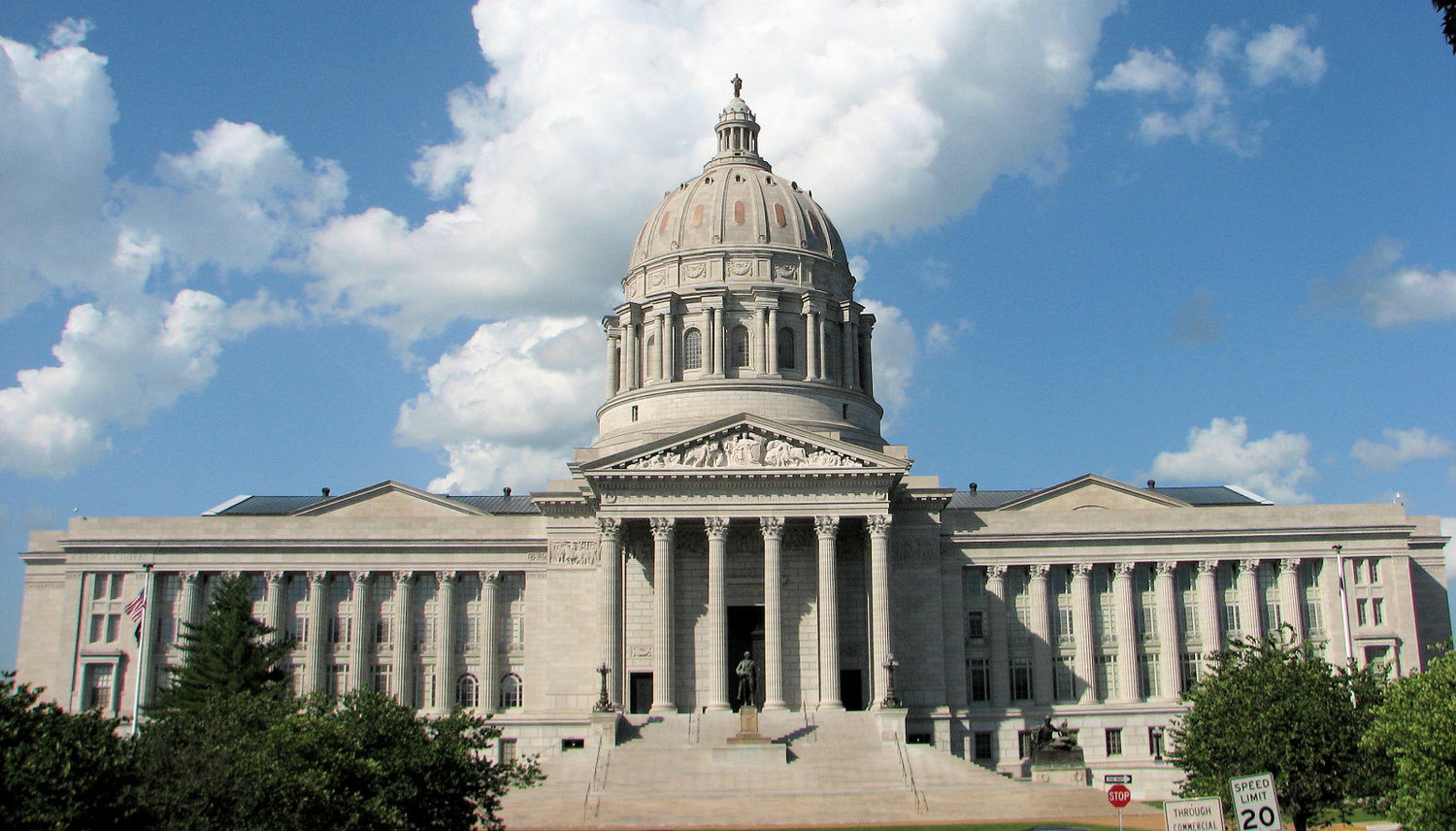
Warren County’s representatives in Jefferson City have given their support to a constitutional amendment that would undo changes to how Missouri draws its map of state House and Senate districts.
The change enacted as part of the 2018 Clean Missouri amendment put this redistricting process in the hands of an appointed demographer. Legislators said they have significant concerns with how that demographer is selected and the criteria used for drawing maps.
Rep. Bryan Spencer, R-63, Rep. Jeff Porter, R-42, and Sen. Jeannie Riddle, R-10, all voted in favor of a resolution to undo the change of Clean Missouri and put redistricting back in the hands of bipartisan committees.
The resolution, which passed in both houses of the Legislature, will have to be approved by voters later this year in the form of a constitutional amendment.
The new amendment would also strengthen restrictions on lobbyist gifts and campaign contributions that were included in Clean Missouri.
Every 10 years, Missouri’s political boundaries are redrawn based on population changes tracked in the U.S. Census. To keep this redistricting process fair and neutral, Clean Missouri created the position of a nonpartisan demographer to draw the new maps in 2021.
The problem with that change, said Rep. Bryan Spencer, is that a partisan elected official, Missouri’s state auditor, is the person who will select the candidates for the demographer position.
“Clean Missouri put redistricting into the hands of one person, appointed by a partisan person,” Spencer said. “When you have a partisan person appointing one (demographer), obviously that person is going to have a bias toward the person who appointed them.”
The proposed 2020 amendment would return the process to committees made of an equal number of republicans and democrats, Spencer said.
Under the committee system, any redistricting map would need to receive 70 percent committee approval, meaning members of both parties would have to vote for it. If a committee can’t decide on a district map, the process goes to Missouri’s Supreme Court and appellate judges.
“Anytime you can get a group of people together to solve a problem, it’s the best way to handle things,” Spencer said. “This allows a group of people who have different backgrounds to draw the (district) lines. They have to come up with common ground.”
Rep. Jeff Porter, R-42, also faulted Clean Missouri for creating the criteria of “partisan competitiveness” for political districts, and making that a priority over preserving geographic communities. The 2020 amendment would instead direct mapmakers to prioritize boundaries that follow county and city lines as much as possible.
Porter said it’s important for each legislator to represent an identifiable geography and culture.
“My district, for example, is all pretty much the same culture — rural, with a little bit of city flavor in Warrenton,” Porter commented. “We want to have (a representative with) the same kind of background ... who would be relatable to the majority of people in the district.”
Porter said he fears the partisan competitiveness provision of Clean Missouri will allow political boundaries that will split up local communities, or have one district representing disparate places like Warren County and St. Louis.
“If you want to have your districts be compact and contiguous, you need to vote for this (amendment),” Porter said. “If you don’t mind having someone from the city as your representative ... then vote ‘no.’ ”
Sen. Jeannie Riddle said she, too, is concerned about the prospect of how districts will be drawn under Clean Missouri.
“The problem lies in, ‘Am I going to have a representative that lives in the general area I live,’ ” Riddle commented. “Feasibly, my district could be long and narrow all the way from Callaway County to St. Louis. Are you going to know the person who represents you? Will they understand you and your values?”
Riddle said she’s heard polarized debate about redistricting from both sides of the issue. She said no one in the Legislature opposes the ethics reforms of Clean Missouri, only the redistricting process.
The right thing to do, Riddle said, was to put the issue before voters to have their say later this year.