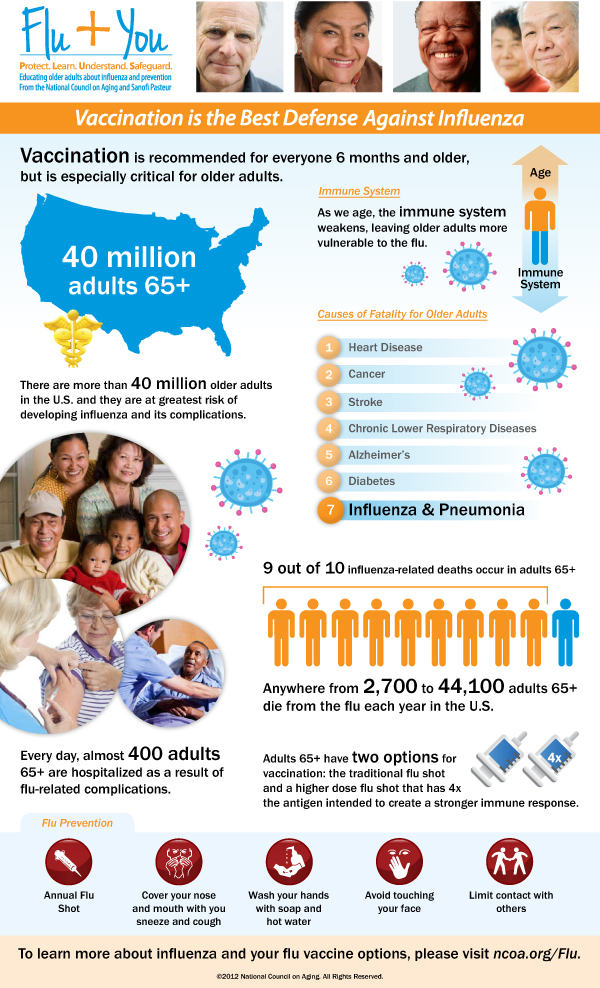
With flu season in full swing, older adults need to know that getting a flu shot doesn’t just help keep them healthy, it also helps prevent the spread of the flu to family and friends. This is …
This item is available in full to subscribers.
We have recently launched a new and improved website. To continue reading, you will need to either log into your subscriber account, or purchase a new subscription.
If you are a digital subscriber with an active subscription, or you are a print subscriber who had access to our previous wesbite, then you already have an account here. Just reset your password if you have not yet logged in to your account on this new site.
If you are a current print subscriber and did not have a user account on our previous website, you can set up a free website account by clicking here.
Otherwise, click here to view your options for subscribing.
Please log in to continue |
With flu season in full swing, older adults need to know that getting a flu shot doesn’t just help keep them healthy, it also helps prevent the spread of the flu to family and friends. This is particularly important during the holidays because family members of all generations spend time together in close quarters increasing the risk of spreading the flu. Individuals may be infected with the flu and spread it several days before showing symptoms. Older adults are particularly at risk for influenza because the immune system weakens with age making it less able to fight influenza infection and less responsive to vaccination. Adults 65 and older have two vaccination options – the traditional flu shot and a higher dose shot designed to trigger a stronger immune response following immunization. Both flu vaccine options are widely available and covered by Medicare Part B with no copay.